LightBlog

jeudi 31 décembre 2020

Samsung Galaxy S21 teaser says “a new Galaxy awaits”

One day before the New Year, Samsung has released a short video teasing the Galaxy S21. “A new Galaxy awaits,” the video says, as Samsung takes viewers through a decade of Galaxy S releases.

Unfortunately, no details for the Galaxy S21 are revealed. Not that we expected Samsung to share detailed information, but it would have been nice to see something, anything.

If you’ve been keeping up with the Galaxy S21, Samsung’s new device has leaked multiple times over the past month, to the point where we know pretty much everything, from the design to the specs. So, while Samsung is playing coy, that doesn’t mean we don’t know what to expect ahead of the Galaxy S21’s official unveiling.

While no details are shared, the new teaser video serves as an official declaration from Samsung that it’s preparing to make an announcement very soon. In essence, it’s time for the marketing machine to kick into high gear and dominate the conversation for the next few weeks.

Samsung is expected to release three new devices at its upcoming Unpacked event: the Galaxy S21, S21 Plus, and S21 Ultra. The latter device will reportedly feature S Pen support, which would be a first for the Galaxy S series. It would also lend support to rumors about Samsung officially nixing the Galaxy Note series, although a recent report threw cold water on that rumor.

Whatever we wind up seeing, Samsung would very much like consumers to know that “a new Galaxy awaits.” From the numerous leaks we’ve seen, Samsung’s Galaxy S21 series looks like its strongest lineup yet. We’re especially excited to see the new design, which now includes a flat display and re-designed camera module. With a rumored January 14 event on the horizon, expect more teasers from Samsung over the coming days.

The post Samsung Galaxy S21 teaser says “a new Galaxy awaits” appeared first on xda-developers.


from xda-developers https://ift.tt/3hufzgS
via IFTTT

These are the best phones for AT&T available right now!

There’s no getting around this: carrier compatibility can make your choice of a phone harder if you’re in the U.S. Often, you’re forced to buy your phone directly through a carrier or jump through hoops to activate it on your carrier, which can introduce several complicated variants. If you import a phone from overseas, it can be quite crippled in the U.S. And AT&T is arguably one of the biggest carriers in the U.S, but also one of the most annoying ones when it comes to getting their phones to work. Luckily, though, if you’re an AT&T customer, the company has a lot of options available for you to check out. We’ve compiled a list of some of the best AT&T phones you can get today.

From high-end devices trickling all the way down to budget phones, you can rest assured that there’s an option for you. To ensure carrier compatibility issues are out of the gate, we’ve focused our list on smartphones you can get directly from AT&T themselves, rather than devices you can bring in to AT&T, as compatibility for those devices can get a bit hit-or-miss. Most of these will also have support for AT&T’s 5G network. If you are on Verizon, you can check out our list of best Verizon phones.

Navigate this guide:

Best Overall: Samsung Galaxy Note 20 Ultra

Samsung’s Galaxy Note lineup has gotten expensive. And while we’re about to see new Samsung flagships any time soon, the Samsung Galaxy Note 20 Ultra still remains Samsung’s crème de la crème for the time being, and it’s still an amazing smartphone in every way and shape possible. The display is amazing, providing Samsung’s usual world-class color accuracy, brightness, and resolution and pairing it with a 120Hz display, just like the Samsung Galaxy S20 series that launched earlier in 2020. It also has copious amounts of RAM and storage, so you don’t ever encounter issues on any of those fronts, and the 108MP camera manages to provide an amazing experience, all things considered.

It’s one of the best Android phones of the year, period, and it’s evidently one of the best AT&T phones you can get right now.

    Galaxy Note20 Ultra
    The Galaxy Note20 Ultra is Samsung's boldest flagship to date, boasting top-of-the-line specifications and top-of-the-line everything, as well as amazing cameras, battery, and software.

Runner-Up: Apple iPhone 12 Pro Max

iPhone 12 Pro and Pro Max

Just like how the Note 20 Ultra is Samsung’s best so far, the iPhone 12 Pro Max shows why Apple has the stronghold they currently have in the U.S, even as Android manufacturers actively try to gain foot there. It’s an amazing device in every sense, refining on the iPhone 11 lineup and improving on things such as the camera, the overall build quality, and premium feel, and of course, everything that makes an iPhone actually an iPhone. A big 6.7-inch display is in tow as well as a triple rear camera with a LiDAR sensor and an amazing Apple A14 SoC based on a 5nm process.

Everything about this device screams expensive and premium, which is why it’s a very close runner-up to the best AT&T phone out there. Oh, and it’s also one of the first iPhones with support for 5G, in case that’s something you’re interested in.

    iPhone 12 Pro Max
    The iPhone 12 Pro Max is Apple's best so far, bringing a bold battery, bold cameras with an all-new LiDAR sensor, an Apple A14 SoC, and more. It's as good as iOS gets right now.

Best for Most People: Google Pixel 5

They say five’s the charm (or something like that). And it really did ring true with the launch of the Google Pixel 5, Google’s newest Android smartphone. Some people actually saw it as a deathwish from Google: previous Pixel devices launched with flagship specifications, while this one threw that out of the window and launched with the Snapdragon 765G, a decidedly mid-range processor. But that also allowed Google to build a device that’s way more balanced all in all, as it manages to fix a lot of the previous Pixels’ shortcomings. We have better battery, a better display, and of course, those amazing cameras we’ve all come to know and love dearly. And let’s be honest, the Snapdragon 765G is good enough for most people.

If the Pixel 5 sounds like your kind of phone, then you’d be glad to know that this phone is also one of the best AT&T phones available out there. Check it out!

    Google Pixel 5
    The Google Pixel 5 shows that Google has managed to continually evolve. The result is a Pixel device that's way more balanced than everything that came before it, despite the mid-range SoC, and as good as it gets for Google phones right now.

Best Compact: Apple iPhone 12 Mini

Compact devices have been uncharted territory for a lot of Android manufacturers, but Apple pulled a new trick out of their hat this year. While Android phones keep getting bigger, Apple took a U-turn on that trend and launched the iPhone 12 Mini, which is probably the smallest phone I’ve seen in a solid amount of years. It has a 5.4-inch display and considering that the display is still the typical 19.5:9 Apple has been doing since 2017, this means that we have a phone that is absolutely tiny: it’s smaller than the new iPhone SE, and it’s actually just slightly bigger than the iPhone 5/5S. And that phone had a 4-inch display. Despite this, it still manages to retain the high-end features in the other iPhones, including the A14 processor and the camera.

It really can’t be understated how small this phone is, and if you’ve been waiting for something like that, then go ahead and grab it from AT&T, as it’s sure one of the best AT&T phones currently available.

    iPhone 12 Mini
    The iPhone 12 Mini is Apple's smallest phones to date, but don't let that tiny size fool you: it's just as powerful as the other phones in the iPhone 12 series. It comes with the same Apple A14 processor and the same cameras, despite only having a tiny 5.4-inch display.

Best Bleeding Edge: Samsung Galaxy Z Fold 2

The Samsung Galaxy Z Fold 2 is the definition of throwing everything but the kitchen sink, smartphone edition. The original Galaxy Fold was a demonstration of this, as it was Samsung’s first foldable smartphone and a peek at what they called the “future” of smartphones. That phone, though, had several issues and rougher edges that are common with a first-generation product. The Galaxy Z Fold 2? Not so much. It’s much more refined, with the same “ultra-thin” glass featured in the Galaxy Z Flip, and improving on things such as the hinge, the displays, the battery, the camera, and much, much more. It’s still not perfect, but it’s clearly getting there.

If you’ve been sitting on a foldable smartphone and have been waiting for them to become better, then the Galaxy Z Fold2 is one of the best AT&T phones you should be checking out today.

    Galaxy Z Fold2
    The Galaxy Z Fold2 is the second generation of foldable smartphones from Samsung and serves as a more closer look on how foldable phones might look like in the future. While the Galaxy Fold functioned more like a first-gen product, the Z Fold2 comes much closer to realizing Samsung's foldable aspirations.

Best Mid-Range (with 5G): Google Pixel 4a 5G

The Google Pixel 4a 5G might be worth an even bigger look than the Google Pixel 5 if you don’t really care about things such as having a high refresh rate display. This is because the Pixel 4a 5G actually shares a lot more DNA with the Pixel 5 than with its smaller cousin, the Google Pixel 4a. The Pixel 4a 5G brings 90% of what the Pixel 5 is to a cheaper package: it has the same Snapdragon 765G SoC, the same cameras, and a lot of stuff remains the same too. It’s also bigger than both the Pixel 5 and the Pixel 4a, which is also good news if you’re a fan of bigger phones. Of course, it also has full support for AT&T’s up-and-coming 5G network.

If you’re in the market for the best AT&T phone that doesn’t break the bank and comes with 5G support, the Pixel 4a 5G might just be the option for you.

    Google Pixel 4a 5G
    The Google Pixel 4a 5G is a down-step from the Google Pixel 5, although you're still getting the same horsepower and most of the features that are included with the higher-end model, despite the fact that this is branded as a Pixel 4a instead of as a Pixel 5.

Best Mid-Range: Apple iPhone SE (2020)

The iPhone SE is a rare incursion of Apple into the mid-range market. But it’s a weird one at that. In many ways it feels more of a “flagship killer” as it was pioneered by OnePlus back in the day: the iPhone SE comes with the very same SoC that powers the iPhone 11 lineup, the Apple A13. That means you’re getting the same performance as Apple’s last-gen flagship. But it also has the same form factor as the iPhone 8, which can probably feel very dated to this day, with thick bezels and an HD display. Don’t get me wrong, though: it’s an iPhone 8 with the internals of an iPhone 11, which is awesome, and it’s sure one of the best, if not the best, options within its price point.

It’s one of the best AT&T phones even though it’s hardly the best in Apple’s lineup, and the few sacrifices it makes are really hard to scoff at. Check it out!

    iPhone SE (2020)
    The second-generation iPhone SE comes packed with quite a lot of phone despite what the retro bezels and home button might suggest. It's essentially an iPhone 11 in an iPhone 8's body, rocking the same Apple A13 SoC. And we're here for it.

Best Budget: Galaxy A11
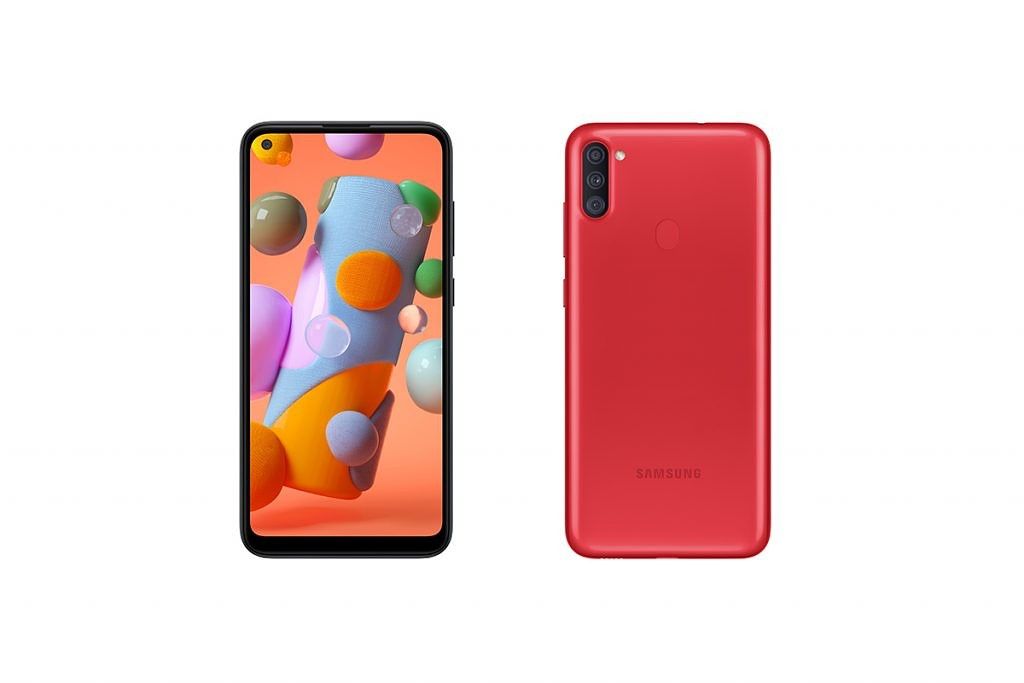
Samsung makes amazing phones both in the high end and the low end of the market, and the Galaxy A11 is a testament to what they can do in the low end. The Galaxy A11 is hardly a lackluster device, and the Snapdragon 450 that powers it is not the most performant CPU out of the bunch, or maybe even out of its price point. But it makes up for it by providing the same Samsung experience and One UI software that comes with the high-end devices and brings it to the low end of the spectrum through One UI Core. The result is a device that looks pretty good for its price point with a modern-looking hole-punch display, a triple rear 13MP camera, 64GB of storage, and a beafy 4,500 mAh battery.

If you’re looking for something that will do the job on a tight budget, this is one of the best AT&T phones you should be considering.

    Galaxy A11
    The Galaxy A11 isn't a high-end phone, and it doesn't try to be one. And that's the magic of it. If you need a phone that does the job and you're on a really tight budget, then the Galaxy A11 should fit your bill pretty well.

Best Unique: LG Wing

LG had a pretty weird 2020. The LG Velvet was proof of that. The LG Wing, though… This definitely earns the “unique” award by quite a long shot. LG is no stranger to trying out new and weird things: we just need to have a look at the LG G5’s weird module system, the LG G8’s “hand scanning” mechanism, and a lot of other gimmicks that the company has pioneered and that have then flopped with varying degrees of failure. The latest one in that list is the LG Wing, which features a display that slides to a horizontal orientation to then reveal a smaller, square-shaped display under it, effectively sliding out like a “wing”. While I think it’s a gimmick that won’t be back next year, I still think it’s pretty cool, so my respects to LG on that.

And if you want to check out yourself, it’s also one of the best AT&T phones available, with full support for 5G thanks to the Snapdragon 765G processor in tow.

    LG Wing
    The LG Wing does pretty well what LG has learned to do through the years: being unique and standing out. With a display that slides out horizontally, you're definitely gonna be standing out. And the Snapdragon 765G and other specs should serve you pretty well, too.

Honorable Mention: Galaxy A51 5G

Samsung Galaxy A51 5G in pink

The Galaxy A51 5G was one of the best mid-range smartphones Samsung put out through the year, and I still think it deserves a mention if you’re looking for a Samsung midrange that supports 5G and comes with all the Samsung goodies that you’d expect. The Galaxy A51 5G comes with the Exynos 980 SoC, a decently-performing mid-range processor, and comes in with up to 8 GB of RAM and 128 GB of storage, so it should be able to shred most tasks you throw at it. While the Pixel 4a 5G in the same price bracket steals some of this phone’s shine, it still has its charm, even heading into 2021 when it will eventually be replaced by a looming Galaxy A52.

It’s one of the best AT&T phones available out there if you’re looking into midrange options. Oh, and it’s also $1/mo through AT&T right now, so it’s an amazing bargain you should look at if you’re tied to AT&T.

    Galaxy A51 5G
    The Galaxy A51 5G was Samsung's best offering in the middle range through 2020, featuring an Exynos 980 SoC, up to 8 GB of RAM, 128 GB of storage, and a 48MP camera, as well as, of course, 5G support.

This pretty much sums up our list of the best AT&T phones currently available. At the top of the line, we have options from Samsung and Apple that are worth considering if you’re looking into phones that look and feel premium and high-end, such as the Galaxy Z Fold 2, the Galaxy Note 20 Ultra, and the iPhone 12 Pro Max. Then, we have options trickling down to everything from compact phones (iPhone 12 Mini) all the way to ruthlessly cheap devices (Galaxy A11). All of these phones can be acquired directly through AT&T and can be paid in monthly installments, trade-in, and more. Check out the respective listings for more specific terms and conditions.

Are you an AT&T user? Are you planning on getting any of these phones?

The post These are the best phones for AT&T available right now! appeared first on xda-developers.


from xda-developers https://ift.tt/34ZYnL8
via IFTTT

Save $40 on the Google Pixel 4a 5G and join the 5G revolution for cheap

There sure have been a lot of smartphone deals this week! With deals on the OnePlus 8 Pro and the TCL 10 Pro, retailers are looking to take those holiday gift cards and cash off your hands. Google isn’t going to sit idly by while others reap the post-holiday benefits, though. Currently, on Amazon, you can save $40 on the new Google Pixel 4a 5G and get yourself a 5G phone for cheap.

You may be asking, well, why the Google Pixel 4a 5G? Why not one of the other 5G flagships, or perhaps a budget 5G phone? Well, the Pixel 4a 5G is more or less the definition of a mid-range phone, so you know you’ll be getting one of the best if for that category. With the MSRP at $499, this is an affordable smartphone for those that want to take advantage of a 5G network without having to shell out $1,000 (or more!) for a higher-end flagship.

Of course, with the $40 off, that means it’s even cheaper to enter the new wave of 5G. The best part about this deal, though, is that it’s on Amazon. Amazon provides some of the most painless smartphone purchases around. There’s no need to do any trade-ins to take advantage of the deal (although you can trade in a device for some credit if you wish), and if you have Amazon Prime, you’ll get your Google Pixel 4a 5G in two business days. Finally, if you have the Amazon Prime Rewards Card, you can sign up to pay for your purchase over 12 months! As someone that uses that feature often, it’s extremely helpful.

So, with the Pixel 4a 5G at only $459, with no strings attached, what are you waiting for?

    Google Pixel 4a 5G
    For just $459, you can get a quality 5G phone! Head on over to Amazon and pick up your new Just Black Google Pixel 4a 5G today.

Are you interested in other Google products? Head over to Google’s store page on Amazon to see everything they have!

The post Save $40 on the Google Pixel 4a 5G and join the 5G revolution for cheap appeared first on xda-developers.


from xda-developers https://ift.tt/2L7bC5J
via IFTTT

Huawei P50 Pro’s first leaked render suggests Huawei is sticking with waterfall displays

Huawei has been engaged in a deadlock with the US government for nearly two years now. But that hasn’t stopped the Chinese company from building some of the best smartphones out there. The Huawei Mate 40 series that launched in October this year was the prime example of it, with Huawei flexing its muscles with some of the best smartphone hardware and design on display. And if this new leak is anything to go by, it looks like the company will continue its march forward on the same path next year as well.

The acclaimed leakster Steve Hemmerstoffer has shared the first look of the Huawei P50 Pro, a direct successor to the P40 Pro that launched in March this year. A single render shared by Steve shows off the front of the Huawei P50 Pro. One of the key details revealed by the leak is that P50 Pro, just like its predecessor, will continue to use a waterfall display, with the display steeply curved on its sides while having narrow top and bottom bezels. Moving on, we can also see the dual front camera setup of the P40 Pro has been replaced by a more discreet single punch hole camera. As per Steve, the Huawei P50 Pro will flaunt a 6.6-inch display on the front in a body measuring approximately 159 mm tall and 73 mm wide.

Huawei P50 Pro

Lastly, the leak revealed the Huawei P50 Pro will no longer use the magnetic earpiece like its forerunner and instead will opt for the more traditional earpiece.

Details about important hardware such as the chipset, camera assembly, battery, and charging speed remain a mystery at this point. On the software front, Huawei P50 Pro could run Harmony OS 2.0, the latest version of Huawei’s own operating system. However, it’s too early to comment on these details. There will likely be more leaks in the coming weeks so we should have more details about this upcoming flagship smartphone.

The post Huawei P50 Pro’s first leaked render suggests Huawei is sticking with waterfall displays appeared first on xda-developers.


from xda-developers https://ift.tt/2LdvHHh
via IFTTT

How to enable the Pixel 5’s Adaptive Sound feature on older Pixel phones

Google rolled out the fifth Pixel Feature Drop earlier this month, which brought a host of new features to both old and new Pixel phones. Some older Pixel phones gained features like Hold for Me and Extreme Battery Saver, while only Google’s latest Pixel 4a 5G and Pixel 5 got support for the new Adaptive Sound feature. The Adaptive Sound feature is designed to improve the phone’s audio output by tweaking its equalizer based on your surroundings, and thanks to XDA Recognized Developer Freak07, there’s a way to enable this feature on older Pixel devices. If you’re interested in trying it out on your phone, here’s what you need to do:

Enable Adaptive Sound on older Pixel devices (with root)

On rooted Pixel devices, you can enable the Adaptive Sound feature by following a couple of simple steps, and it will remain enabled even after your reboot your device. To do so, you’ll first need to download the Pixel 5-specific version of the Device Personalization Services app from APK Mirror and install it on your device. Yes, you will already have the Device Personalization Services app installed, but the version of the app that Google pushed to your phone doesn’t include the Adaptive Sound feature. Hence, you’ll need to grab the one that Google made for the Pixel 4a 5G and Pixel 5. You can download that version of the app by clicking this link.

Once you have the app installed, you’ll need to download and install the Adaptive_Audio_Settings_Enabler Magisk module from the Magisk Manager app and restart your device. Alternatively, you can download the module by following this link and flash it manually. A few moments after a successful reboot, you should see the Adaptive Sound option in device settings.

Enable Adaptive Sound on older Pixel devices (without root)

On non-rooted Pixel devices, the process to enable Adaptive Sound is a bit more complicated as you have to execute a couple of shell commands. But before you get to that, you have to install the Pixel 5-specific version of the Device Personalization Services from APK Mirror and install it on your device. You can get the app by following this link.

Once you have the app installed, make sure you have USB Debugging enabled on your device. You can do so by heading over to Developer Options and tapping on the toggle next to the USB Debugging setting. You’ll also need to ensure that you have a working ADB environment on your PC (we have a tutorial on that here). After you’ve done that, you’ll need to connect your phone to your PC and execute the following 3 commands one-by-one:

adb shell
device_config put device_personalization_services AdaptiveAudio__enable_adaptive_audio true
device_config put device_personalization_services AdaptiveAudio__show_promo_notification true

After you execute these three commands, you should see the Adaptive Sound option in the device settings. Unlike the method for rooted devices, though, this method doesn’t enable the Adaptive Sound option permanently, and it’s removed once you reboot your device. So, make sure you don’t reboot your device after following the aforementioned steps, or you’ll have to go through it once again.

Enable Adaptive Sound on older Pixel devices XDA Forums thread

The post How to enable the Pixel 5’s Adaptive Sound feature on older Pixel phones appeared first on xda-developers.


from xda-developers https://ift.tt/38M4mV2
via IFTTT

An Update on XDA Labs

It was five years ago that we launched XDA Labs after hundreds of hours of development. The primary purpose was to create an alternate app distribution platform for developers that couldn’t host on Google Play. Labs had other features such as beta and alpha channels (before Google added the same to Google Play) to enable developers to have more control over their app distribution and testing. Not only that, but Labs let users get early access to new versions of popular apps with an update mechanism that would “push” updates to phones often days or weeks before Google or other big developers did full rollouts of new app versions.

In addition to being an app platform, XDA Labs also included a way to browse the XDA forums through a ground-up forum app we built in house using our own API. However, it’s been five years, and we find ourselves having to make some difficult decisions as we look towards the future of XDA where we plan to make XDA the best place in the world to talk about your tech.

The most significant decision we’ve made recently was to move from an outdated software platform (vBulletin) to something more modern and flexible (XenForo). This undertaking was huge and presented issues that have been resolved (thanks everyone for your patience!), and we’re happy to report that the forums are now stable and relatively fast, and our members have been pretty happy with the upgrade. Along with the migration we recently introduced the new XDA App, built using a platform that allows a combination of native and webviews (for those trying to learn how to use the new app, we have a great guide in the forums).

There’s yet another big change we have to announce, and we do it with a heavy heart knowing that it will affect several developers who have come to rely on XDA Labs to distribute their app: XDA Labs has been shut off and there are no current plans for further development.

Why such a drastic move? There are multiple reasons for it, the biggest of which come down to resources: the team that runs XDA is small and we can no longer dedicate the resources needed to continue running and maintaining Labs. Labs has many inherent costs we are no longer able to support as a business. We always wanted Labs to be free, and we see no path to keep it viable at this juncture.

What about those that have relied on Labs to distribute their apps and will mourn its loss? We’re sorry that we have to pull the plug on this project, and we’re sympathetic to the fact that you put your trust in the Labs platform only to have it unplugged. If it’s any consolation, effective today (12/31/20), we are massively increasing attachment limits in the XDA forums to 2GB. External users do not require an XDA account to download attachments; just share the file URL as you need! While this isn’t the same as the Labs app store, we do hope this still provides you a resource from which to distribute your app.

When we first announced the forum migration a few months ago, we invited anyone interested in continuing to maintain Labs to contact us. Unfortunately, we’ve had no viable proposals. We are willing to open-source the entire project if anyone would like to pick up the mantle. If you’re interested, please contact XDA Admin svetius.

In the meantime, we want to say thank you to everyone who made Labs possible. Many thanks to XDA Recognized Developer blk_jack, who was the godfather and main creator of this app, plus the many other testers, coordinators, and developers that worked on Labs in any shape or form. Many thanks to the dev team at XDA for maintaining it over the years, and to all our forum members who made our Labs dream possible. Labs was born out of a need from our community and while we’re unable to support it going forward, we truly hope that the community will rise up and continue keeping Labs running.

We’ve got lots of special plans for XDA as a whole and the XDA community and we can’t wait to share them with you in 2021 and beyond! Thanks for your ongoing support!

The post An Update on XDA Labs appeared first on xda-developers.


from xda-developers https://ift.tt/2L6NHDh
via IFTTT

Samsung Galaxy Z Flip 4G is getting Android 11 with One UI 3.0

Just yesterday, Samsung began rolling out the One UI 3.0 update on top of Android 11 to the Galaxy Note 10 lineup. Today, the Korean OEM is starting to deliver the same update to the Galaxy Z Flip 4G, introducing several improvements along with a new security patch.

Samsung Galaxy Z Flip 4G XDA Forums

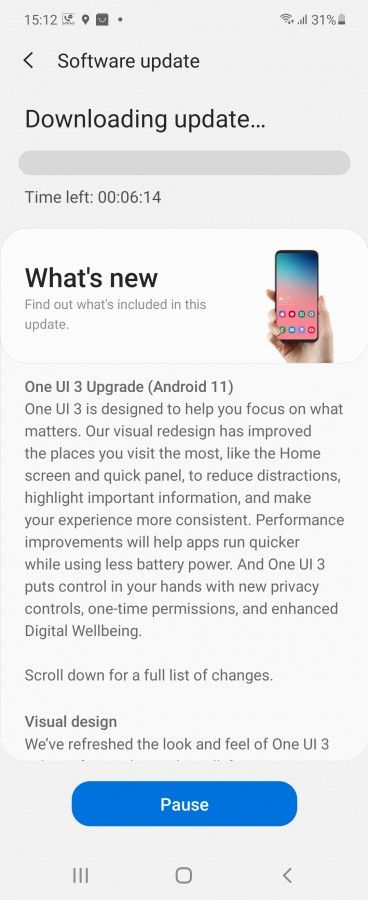
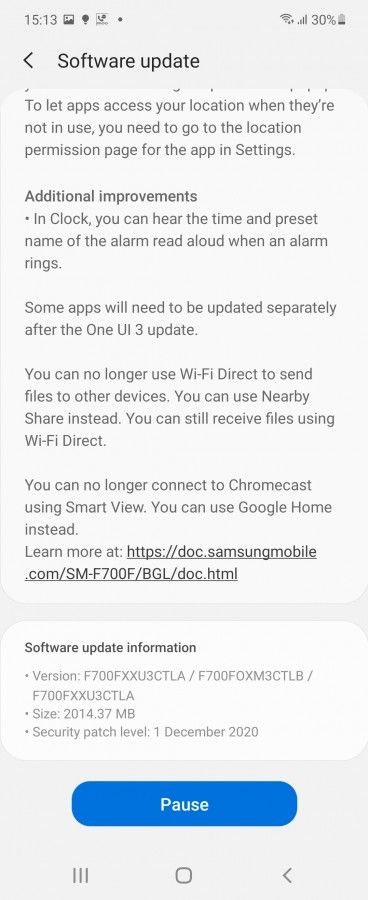
As reported by GSMArena, the One UI 3.0 update for the Galaxy Z Flip 4G (model number SM-F700F) has the firmware version F700FXXU3CTLA and comes in at nearly 2GB. The update is currently rolling out in a number of countries across Asia, Europe, and Africa, which suggests that Samsung has already started the broad-scale rollout. The OTA also brings Android security patches up to December 2020, along with new features for the Samsung keyboard and the Messages app.

Samsung Galaxy Z Flip 4G One UI 3.0 Android 11_1 Samsung Galaxy Z Flip 4G One UI 3.0 Android 11_2

One UI 3.0 Changelog for the Samsung Galaxy Z Flip 4G

One UI 3 is designed to help you focus on what matters. Our visual redesign has improved the places you visit the most, like the Home screen and quick panel, to reduce distractions, highlight important information, and make your experience more consistent. Performance improvements will help apps run quicker while using less battery power. And One UI 3 puts control in your hands with new privacy controls, one-time permissions, and enhanced Digital Wellbeing.

Scroll down for a full list of changes.

Visual design

  • We’ve refreshed the look and feel of One UI 3 in lots of ways, big and small, from new, more consistent icons to smarter organization of the quick panel and notifications. Motion is smoother and more natural than ever, with improved animations and haptic feedback for common interactions. And the interface responds to different screen sizes to provide the best experience on any device, whether it’s a phone, foldable, or tablet.

Improved performance

  • We optimized One UI 3 with enhanced dynamic memory allocation, so apps run faster and perform better. We’ve also restricted background activities to provide better performance and power usage.

Better customization

  • New image categories have been added to Dynamic Lock screen, and you can select up to 5 categories at once.
  • On the Lock screen, you can add a widget to check your usage time.
  • Get an interactive preview when setting a wallpaper.
  • Adjusting the Always On Display and Lock screen is easier.
  • Add a call background to see a picture or video when you make or receive a call.
  • In Samsung Internet, you can reorder and lock tabs.
  • Bixby Routines has even more controls to help you automate your life.
  • New icons and Lock screen widgets make it easier to find and control your routines.
  • Use Digital Wellbeing with separate personal and work profiles.

Enhanced features

  • Home screen and Lock screen
    • Add widgets by touching and holding an app on the Home screen.
    • Turn off the screen by double tapping on an empty space on the Home or Lock screen. (Set it up in Settings > Advanced features > Motions and gestures.)
    • On the Lock screen, tap the clock area to see widgets like calendar, weather, and music.
  • Calls and chats
    • See conversations separately in the notification panel. Works with Messages and your favorite chat apps.
    • Easily remove duplicate contacts stored in the same account in Contacts. The storage period for deleted contacts has been extended from 15 days to 30 days.
    • Added the ability to edit multiple linked contacts from a single screen.
    • Added Trash in Messages so that recently deleted messages are stored for 30 days.
  • Pictures and videos
    • Take pictures quicker with improved auto focus and auto exposure.
    • View, edit, and share pictures and videos more easily from Gallery.
    • Find pictures and videos quicker with new search features and categories in Gallery.
    • Revert edited pictures to their original versions at any time, even after they’re saved, so you never lose a shot.
  • Settings
    • Settings has a new simpler look and feel. Your Samsung account is shown at the top, and Home screen settings are now easier to access.
    • Find the settings you need more easily with new Search features. You’ll get better results for synonyms and common misspellings, and you can tap on tags to see groups of related settings.
    • Quick settings buttons have been reduced to provide only the most commonly used features. You can also add buttons to create your own customized quick panel.
  • Samsung Keyboard
    • Increased the number of input languages to 370.
    • Made it easier to paste copied images and verification codes from text messages.
    • Added emoji and sticker suggestions when you enter a text-based emoticon.
    • Improved the keyboard layout to provide a larger space bar when entering web and email addresses.
    • Reorganized Keyboard settings so it’s easier to access frequently used settings.
  • Productivity
    • Maintain a healthy balance between work and life by minimizing repetitive and complicated tasks and handling them efficiently.
    • New routines will be recommended based on your daily life and usage patterns.
    • Bixby Routines provide a setting to return everything to the way it was before the routine ran.
    • In Internet, you can hide the status and navigation bars for a more immersive experience and quickly translate webpages.
    • You’ll be prompted to block websites that send too many pop-ups or notifications.
    • You can browse and select cloud drive files from the file selection screen in My Files.
    • You can now delete cache files in My Files to easily free up storage space.
    • Events with the same start time are displayed together in the month and agenda view in Calendar.
  • Easy media and device control
    • Media and device control is easier with the improved media panel in notifications. You can see recently used media apps and quickly change the playback device. You can also check Android Auto settings in the Advanced features menu in Settings.

Identify and improve your digital habits

  • Improved Digital Wellbeing features make it easy to check how you’re using your phone or tablet and help you form good digital habits. Check your usage while driving or see weekly changes in your screen time by function at a glance through upgraded weekly reports.

Accessibility for everyone

  • One UI 3 recommends useful accessibility features for you based on your usage. The improved Accessibility shortcut makes accessibility features easier to start and use. You can use the Speak keyboard input aloud feature to get voice feedback of your typing even when TalkBack is turned off.

Stronger privacy protection

  • You can now let an app access to your microphone, camera, or location just one time. Any permissions that an app hasn’t used in a while will be automatically revoked. You can no longer give apps permission to always see your location in the regular permission popup. To let apps access your location when they’re not in use, you need to go to the location permission page for the app in Settings.

Additional improvements

  • In Clock, you can hear the time and preset name of the alarm read aloud when an alarm rings.

Some apps will need to be updated separately after the One UI 3 update.

You can no longer use Wi-Fi Direct to send files to other devices. You can use Nearby Share instead. You can still receive files using Wi-Fi Direct.

You can no longer connect to Chromecast using Smart View. You can use Google Home instead.

Ever since the Galaxy S20 series received stable One UI 3.0 update, the process of rolling out Android 11 to older Galaxy devices has been steadily progressing. The 5G variant of the Galazy Z Flip has already secured the update, and it’s nice to see the 4G model now gets the same treatment as well.

In case you haven’t received the update notification on your Galaxy Z Flip 4G yet, you can head over to the Software Update section in the Settings app to check if the FOTA is available for your device or not. Power users, on the other hand, can opt for Frija or Samloader, which makes it a lot more easier to download the new build directly from the update server without waiting.

The post Samsung Galaxy Z Flip 4G is getting Android 11 with One UI 3.0 appeared first on xda-developers.


from xda-developers https://ift.tt/3o50zbx
via IFTTT